
This article contains affiliate links. We may earn a commission if you buy through our links, at no extra cost to you. Last reviewed: August 2026.
A frozen condensate pipe is one of the most common reasons a boiler suddenly stops working during a cold snap, and it is also one of the few boiler faults you can usually fix yourself in about fifteen minutes, with no engineer and no gas work involved. If your boiler has shut down in freezing weather, is showing a fault code, or is making a gurgling noise, a frozen condensate pipe is the first thing to suspect.
The condensate pipe is the plastic pipe that carries waste water away from a modern condensing boiler to an outside drain. When the external section freezes, the boiler shuts itself down as a safety measure to stop that waste water backing up inside it. This guide explains how to spot the problem, the brand fault codes that point to it, exactly how to thaw the pipe safely (the one mistake to avoid is using boiling water), and how to stop it happening again.
 ★★★★★
4.8 from 14,000+ reviews
★★★★★
4.8 from 10,000+ reviews
★★★★★
4.8 from 14,000+ reviews
★★★★★
4.8 from 10,000+ reviews
Frozen condensate pipe: the short answer
Find the white plastic condensate pipe outside and follow it to the section that feels coldest, usually the open end or a bend near the ground. Apply warm (not boiling) water by pouring it slowly over the frozen part, or hold a hot water bottle or hot cloth against it, until the ice clears. Then reset the boiler following your manual. Once it is working again, insulate the pipe to stop it freezing again. It is a safe homeowner fix that involves no gas work.
What is a condensate pipe?
Every modern condensing boiler (anything installed in the UK in roughly the last 15 years) produces a small amount of slightly acidic waste water as it extracts extra heat from its exhaust gases. That waste water, the condensate, drains away through the condensate pipe, normally a white or grey plastic pipe similar to a sink or washing machine waste pipe, which runs from the bottom of the boiler to an outside drain or soakaway. Seeing water trickle from it is simply a sign the boiler is working as it should.
Because this pipe carries water and part of it usually runs outside, it is vulnerable to freezing in sub-zero weather. When the water inside freezes solid, the condensate can no longer drain away, so the boiler shuts down as a failsafe to stop the waste water backing up into its internal workings and damaging the electrics.
Signs your condensate pipe is frozen
A frozen condensate pipe almost always shows itself during or just after a cold spell. The common signs are:
- The boiler has stopped and you have no heating or hot water, having been fine before the cold weather.
- A gurgling or bubbling noise coming from the boiler or the pipework, which is the condensate struggling to get past the ice.
- A fault code or warning light on the boiler display (the common ones by brand are in the table below).
- Visible ice on the external plastic pipe, particularly at the open end or at a bend or dip.
It is more likely to happen during prolonged sub-zero weather, if the boiler has not been used much (for example while you are away), or if the boiler is in an unheated space such as a garage or loft, in which case the pipe should be treated as if it were outside.
Frozen condensate fault codes by brand
Most boilers display a specific fault code when the condensate pipe freezes. The common ones are below, but always check your own boiler manual, as codes vary by model.
| Brand | Common frozen-condensate code |
|---|---|
| Worcester Bosch | EA or D5 (flashing light on some CDi models) |
| Vaillant | F28 or F29 |
| Ideal | F2 (Logic range) |
| Baxi | E133, E128 or E28 (display alternates E1 and 33) |
| Glow-worm | F1, F4, F28 or F29 |
How to thaw a frozen condensate pipe
Once you are confident the condensate pipe is the cause, thawing it is straightforward:
- Locate the frozen section. Find the white or grey plastic pipe leaving the bottom of the boiler and follow it to where it runs outside. Run your hand along it to find the section that feels coldest. The blockage is usually at the most exposed point: the open end, or a bend or dip near the ground where water collects.
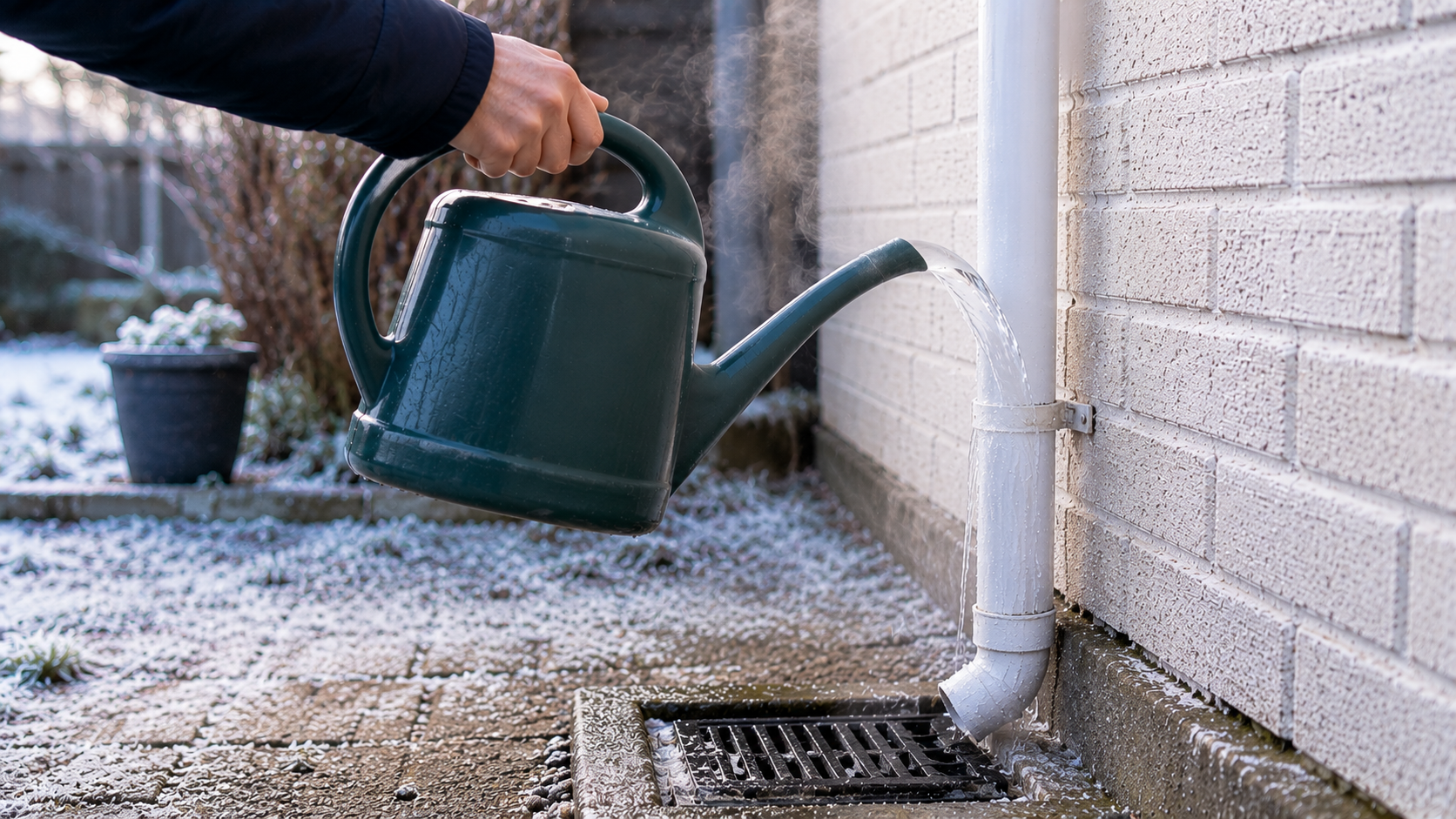
- Warm the pipe. Pour warm (not boiling) water slowly over the frozen section, or hold a hot water bottle, a microwaveable heat pack, or a cloth soaked in hot water against it. Work along the frozen part until you feel it clear. It may take several applications.
- Mind your footing. Any water that runs onto the ground can refreeze quickly in cold weather, so take care not to slip.
- Reset the boiler. Once the pipe is thawed and draining, follow the reset procedure in your boiler manual to clear the fault code and restart it. It can take a couple of attempts before it fires up again.
- If it still will not start, double-check the pipe is fully clear and try once more. If the boiler will not restart after thawing, call a Gas Safe registered engineer.
How to stop it freezing again
Once you have thawed the pipe, a few simple steps make a repeat far less likely:
- Insulate the pipe. Wrap the external section in weatherproof foam pipe lagging, available cheaply from any DIY store. Measure the pipe diameter first and check the insulation is rated for outdoor use. This is the single most effective preventative step.
- Fit a cover over the open end. A simple guard or cap over the pipe’s open end reduces wind chill and stops the most exposed point freezing first.
- Run the boiler a little warmer during a cold snap. Temporarily turning up the boiler’s flow temperature (not the room thermostat) reduces the volume of condensate and helps keep the pipe clearer. Bear in mind this can nudge up your gas bills, so it is a short-term measure for the coldest spells only.
- Consider a permanent fix for repeat offenders. If your pipe freezes every winter, a Gas Safe engineer can reroute it to run internally, fit a wider pipe that is less prone to blocking, or add trace heating that gently warms the pipe in freezing weather. These are the longer-term cures recommended where freezing is recurrent.
When to call a Gas Safe engineer
Thawing the pipe is genuinely a DIY job, but call a Gas Safe registered engineer if the boiler will not restart after you have thawed and cleared the pipe, if you cannot confidently locate or identify the condensate pipe, if the pipe is in an awkward or unsafe position to reach, or if freezing keeps recurring and you want it rerouted or upgraded so it stops happening. Recurring freezing in particular is worth fixing properly, as a boiler that locks out repeatedly through winter is both inconvenient and a sign the pipework was not ideally installed.
Aging boiler, recurring winter breakdowns? Get a fixed-price quote
A frozen condensate pipe is a pipework problem rather than a sign of a failing boiler, but if your boiler is older and you are facing repeated winter breakdowns, a replacement is worth considering, not least because a new installation can route and insulate the condensate pipe to current standards and reduce the chance of it freezing again. Heatable and iHeat both show real installed prices for your home in under 2 minutes, with no obligation and no home survey before quoting. Quote Heatable first for 48-month 0%. Quote iHeat for a second number, or next-day if you order by 3pm. Our boiler lifespan guide helps you weigh up repair versus replacement.
- Online quote in ~90 seconds
- Broader credit acceptance via panel lenders
- Save My Quote for later comparison
- 4.8 stars from 14,000+ Trustpilot reviews
- Online quote in ~60 seconds
- Next working day if you order by 3pm
- Also fits Viessmann, Alpha and Glow-worm
- 4.8 stars from 10,000+ Trustpilot reviews
Common questions about frozen condensate pipes
Can I thaw a frozen condensate pipe myself?
Yes. It is one of the few boiler faults that is genuinely a safe homeowner fix, because the pipe is outside and the job involves no gas work. Apply warm (not boiling) water or a hot water bottle to the frozen section until it clears, then reset the boiler. Only call a Gas Safe engineer if the boiler will not restart afterwards or you are not confident.
Why does my condensate pipe keep freezing?
It freezes because part of it runs outside and the water inside turns to ice in sub-zero weather, usually at the most exposed point such as the open end or a bend near the ground. It is more likely if the pipe is uninsulated, narrow, or routed externally for a long run. If it happens every winter, insulating it, fitting an end cover, or having an engineer reroute or upgrade the pipe will usually solve it.
Can I use boiling water to thaw the pipe?
No. Boiling water can crack or warp the plastic condensate pipe. Use warm water instead, or let a freshly boiled kettle cool for ten to fifteen minutes before using it. A hot water bottle or hot cloth held against the pipe works just as well and is gentler.
Where is the condensate pipe?
It is the plastic pipe (usually white or grey, similar to a sink waste pipe) running from the bottom of the boiler to an outside drain or soakaway. It is normally the only plastic pipe coming from the boiler. If your boiler is in a garage or loft, part of the run may be inside but still in an unheated, freeze-prone space.
Is a frozen condensate pipe dangerous?
Not in itself. The boiler shutting down is a deliberate safety response to stop condensate backing up inside it, so a frozen pipe is an inconvenience rather than a hazard. The only safety point is to avoid creating a slip hazard with refreezing water while thawing it, and, as always, to treat any smell of gas as an emergency.
How do I stop my condensate pipe freezing again?
Insulate the external section with weatherproof foam pipe lagging, fit a cover over the open end to cut wind chill, and during the coldest spells run the boiler’s flow temperature a little higher. If it keeps freezing, a Gas Safe engineer can reroute the pipe internally, fit a wider one, or add trace heating, which are the lasting fixes for a pipe that freezes every year.
This guide was last updated in August 2026. It is general information drawn from manufacturer guidance for UK condensing boilers and does not replace your boiler manual. Thawing the external condensate pipe is a safe homeowner task, but if the boiler will not restart, the pipe freezes repeatedly, or you are not confident, contact a Gas Safe registered engineer. If you smell gas, call the National Gas Emergency Service on 0800 111 999. We are not a credit broker, lender or installer. Heatable and iHeat handle quoting, finance and installation directly.